Google Ads AI vs Manual Campaigns (2025): Complete Beginner-to-Advanced Comparison
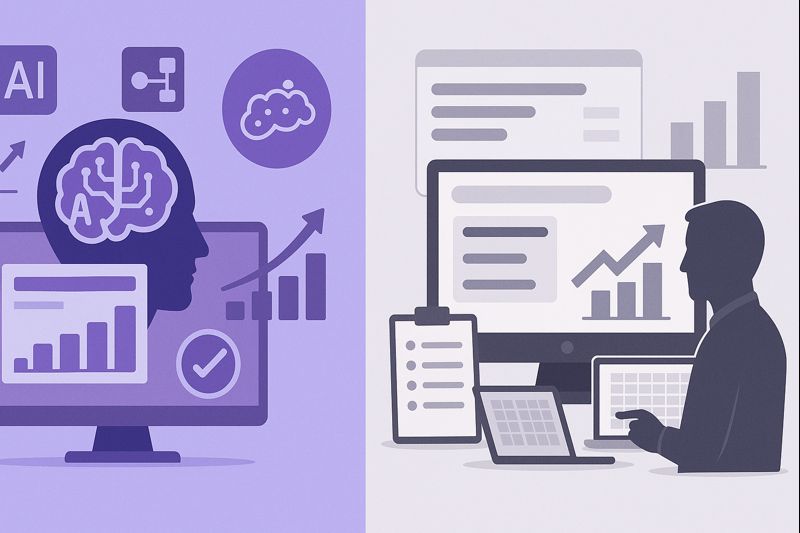
Google Ads has evolved rapidly, especially with the introduction of artificial intelligence. In 2025, advertisers face a critical choice: should they rely on Google Ads AI or continue running Manual Campaigns? While both approaches can work, they differ significantly in execution, control, and performance.
This in-depth guide on Google Ads AI vs Manual Campaigns is written for beginners and experienced marketers. By the end of this article, you will clearly understand which approach fits your business goals, budget, and long-term strategy.
If you are new to automation, first read our pillar guide:
Google Ads AI Explained (2025).
What Is Google Ads AI?
Google Ads AI uses machine learning to automate bidding, targeting, creatives, and budget optimization. Instead of manually controlling every setting, advertisers define goals, and the AI optimizes campaigns in real time.
As a result, Google Ads AI focuses on user intent and conversion probability rather than fixed rules.
Key Features of Google Ads AI
- Smart Bidding automation
- AI-driven audience targeting
- Responsive and automated creatives
- Real-time auction optimization
What Are Manual Google Ads Campaigns?
Manual Campaigns are the traditional method of running Google Ads. Advertisers manually select keywords, set bids, control targeting, and manage budgets.
Although manual campaigns offer high control, they require continuous monitoring and optimization.
Key Features of Manual Campaigns
- Manual keyword research
- Fixed or manually adjusted bids
- Strict targeting controls
- Higher time investment
Google Ads AI vs Manual Campaigns: Core Differences
The most important comparison between Google Ads AI vs Manual Campaigns lies in automation, flexibility, and scalability.
1. Automation Level
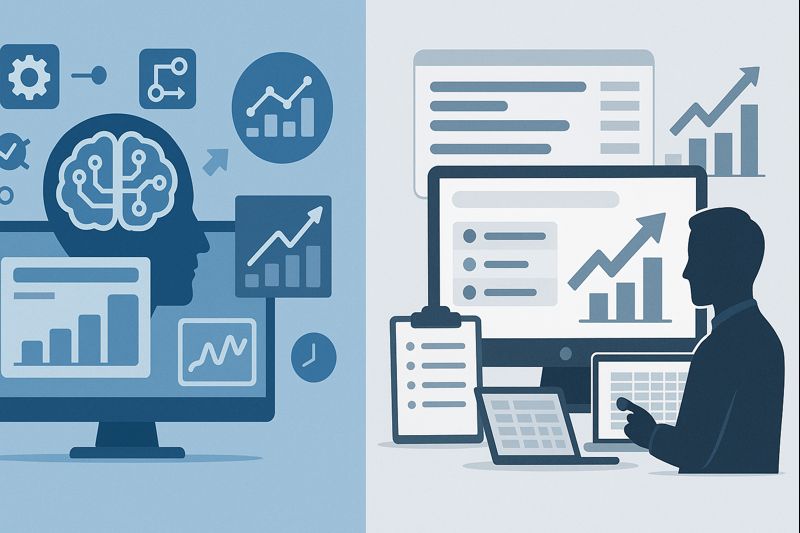
Google Ads AI automates bidding, targeting, and ad delivery. In contrast, manual campaigns rely entirely on human input.
Therefore, AI-driven campaigns scale faster, while manual campaigns offer precise control.
2. Bidding Strategy
Google Ads AI uses Smart Bidding strategies such as Target CPA, Target ROAS, and Maximize Conversions. These bids adjust dynamically for every auction.
Manual campaigns use fixed bids, which may not respond quickly to changes in competition.
3. Targeting and Reach
In Google Ads AI vs Manual Campaigns, targeting methods differ significantly. AI focuses on intent and behavior, while manual campaigns rely on predefined keywords and demographics.
As a result, Google Ads AI often reaches users manual targeting may miss.
Performance Comparison: AI vs Manual
Performance is a key deciding factor when comparing Google Ads AI vs Manual Campaigns.
Conversion Rates
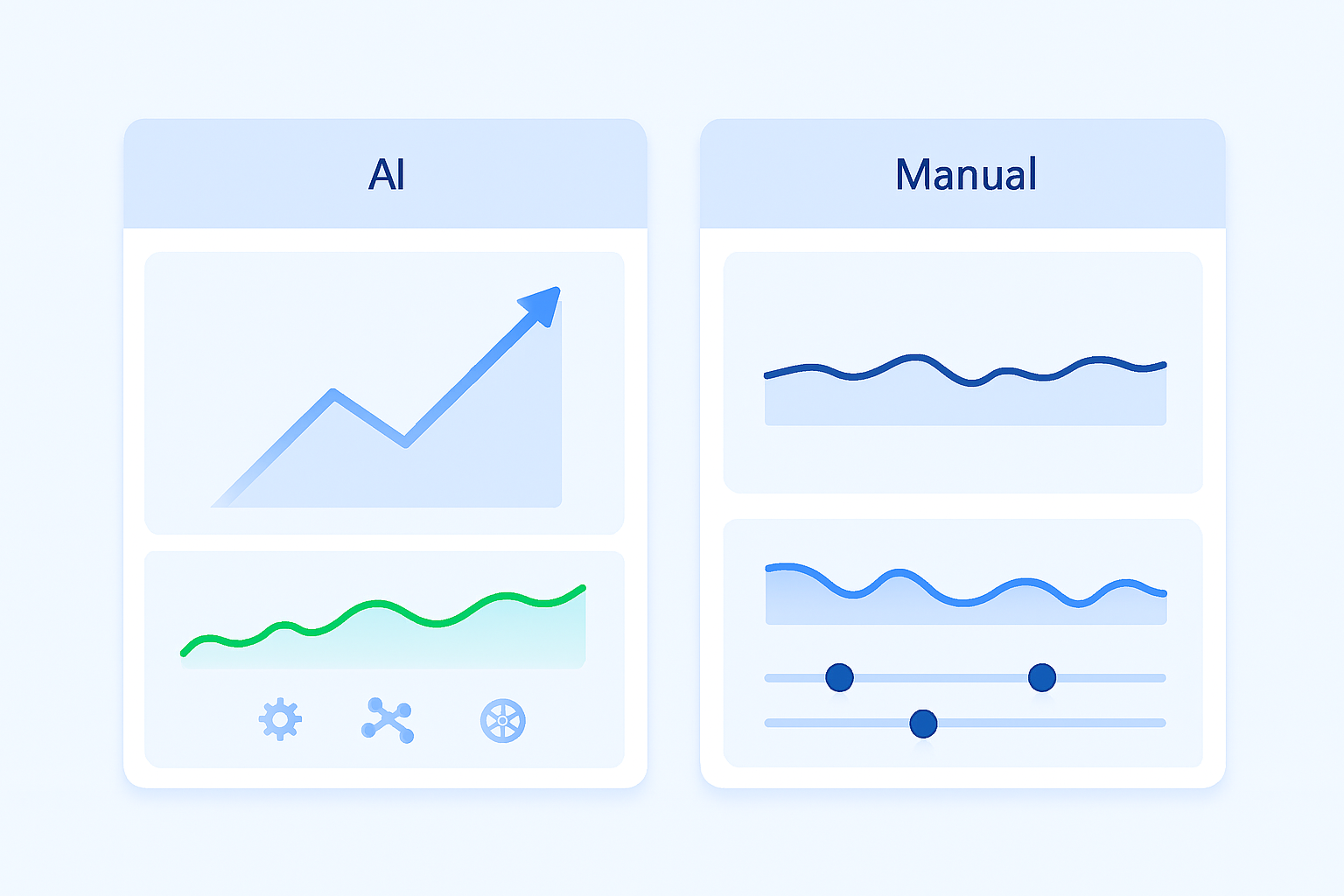
Google Ads AI often delivers higher conversion rates because it continuously learns and optimizes. Manual campaigns require frequent testing to achieve similar results.
Cost Efficiency
AI-driven campaigns may reduce cost per conversion over time. However, during the learning phase, performance may fluctuate.
Manual campaigns provide more predictable costs but may miss optimization opportunities.
Scalability
Scalability is where Google Ads AI excels. AI campaigns easily expand across devices, locations, and audiences, while manual campaigns require additional effort.
Control vs Flexibility
Manual campaigns offer complete control over bids, keywords, and placements. This is ideal for advertisers who need precision.
Google Ads AI offers flexibility and adaptability, but with reduced transparency.
Therefore, choosing between Google Ads AI vs Manual Campaigns depends on your comfort with automation.
Which Is Better for Beginners?
For beginners, Google Ads AI is generally easier. It reduces complexity and automates technical decisions.
Manual campaigns demand deeper technical knowledge and ongoing management.
Advanced Advertiser Perspective
Advanced advertisers often use a hybrid strategy. They combine manual Search campaigns with AI-driven campaigns like Performance Max.
This approach balances control and scalability.
Small Businesses: AI vs Manual
Small businesses benefit from Google Ads AI because it saves time and reduces manual effort.
However, manual campaigns may work well for niche markets with limited competition.
E-commerce Use Case
E-commerce brands usually perform better with Google Ads AI, especially when combined with Performance Max and Smart Bidding.
Manual campaigns can still be useful for branded or category-specific searches.
Budget Management Comparison
Google Ads AI dynamically allocates budget based on performance opportunities.
Manual campaigns require frequent budget adjustments.
As a result, AI adapts better to demand fluctuations.
Common Mistakes to Avoid
- Using AI without proper conversion tracking
- Judging AI performance too early
- Over-optimizing manual campaigns
- Ignoring search term insights
Which Should You Choose in 2025?
The choice between Google Ads AI vs Manual Campaigns depends on your goals, budget, and experience.
If scalability and automation matter most, choose Google Ads AI. If precision and transparency are critical, choose manual campaigns.
In many cases, a hybrid strategy delivers the best results.
Helpful Resources
Internal reading:
Google Ads Performance Max Explained (2025)
External reference:
Google Ads Help Center
Final Thoughts
The debate of Google Ads AI vs Manual Campaigns will continue as automation evolves. In 2025, AI is no longer optional, but manual expertise still plays an important role.
By understanding both approaches, advertisers can make informed decisions and build sustainable advertising strategies.