Best AI Tools for Performance Marketers (Free & Paid)
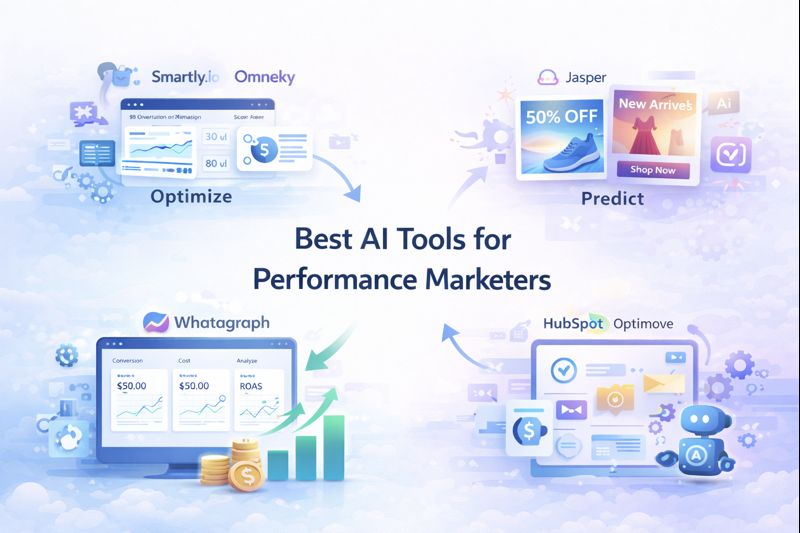
Performance marketers today must move faster and smarter. Fortunately, the market now offers a long list of AI tools for performance marketers that automate repetitive work, generate creative assets, analyze data, and help scale campaigns. In this comprehensive guide, we’ll explore the best AI tools for performance marketers — including free and paid options — and explain how to use them in real workflows to improve conversions, lower CPA, and lift ROAS.
Why Performance Marketers Need AI Tools Today
First, consider the environment: platforms are increasingly automated, competition is rising, and privacy changes force smarter targeting. Therefore, the most effective performance teams combine human strategy with automation. That’s why AI tools for performance marketers are no longer optional; they are strategic multipliers.
Specifically, these AI tools help in three major areas:
- Speed: Automate repetitive tasks like bid adjustments and reporting.
- Scale: Generate many creative variations quickly for A/B and multivariate testing.
- Insights: Surface patterns and optimization signals from large datasets.
How to Choose the Right AI Tools for Your Workflow
Before listing tools, it helps to define selection criteria. Use these five filters to evaluate any AI solution:
- Use case fit: Does the tool solve a clear gap (creative, bidding, analytics)?
- Data privacy & security: Can it integrate safely with GA4, Google Ads, or your CRM?
- Ease of integration: Are there native connectors or APIs?
- Cost vs value: Does expected time saved and/or performance uplift justify price?
- Control & transparency: How explainable are the AI decisions?
With those filters in mind, below are the best AI tools for performance marketers grouped by primary use case. Each tool section includes free vs paid notes, a quick workflow example, and a short pro tip.
Category A — Creative & Ad Copy AI Tools
1. ChatGPT / GPT-based Assistants (OpenAI)
Use case: Ad copy, descriptions, headlines, and A/B copy variations.
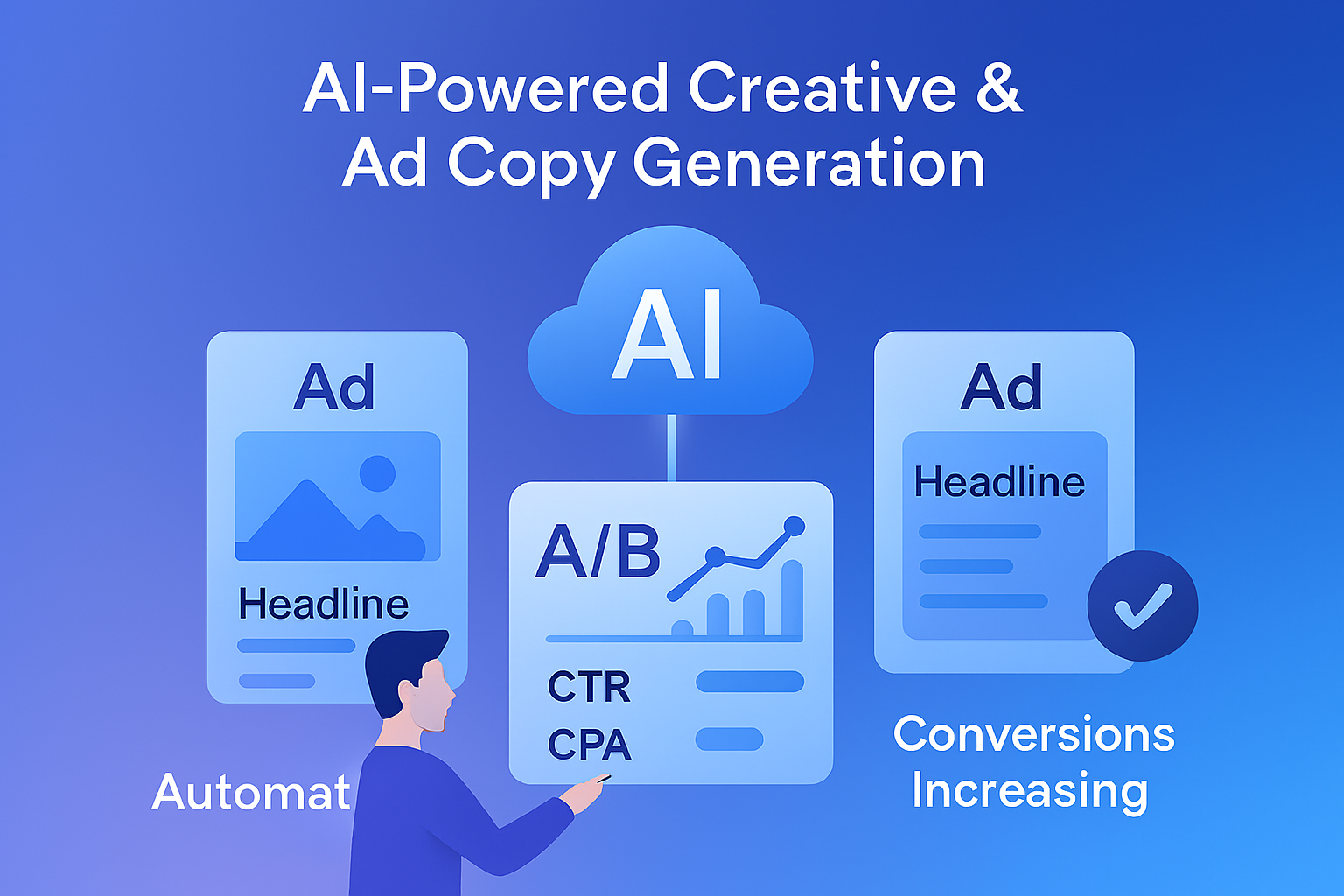
Why it’s a top AI tool for performance marketers: ChatGPT and other GPT-based assistants can produce dozens of headline and description variations in seconds. Consequently, teams can rapidly test language that resonates with different audiences.
Workflow example: Provide a brief including product benefits, target audience, and CTAs. Ask the model for 10 headline variants, 5 description variations, and a short image overlay text set. Then feed top performers into a creative testing pipeline.
Free vs paid: Free tier exists (ChatGPT free), but higher-throughput and API access require paid plans.
Pro tip: Always add human review and brand voice alignment. Use the AI for ideation, not final publishing without edits.
2. Jasper / Writesonic / Copy.ai
Use case: Rapid ad copy generation and multilingual variations.
These platforms package GPT-like models with templates tailored for ads, headlines, and product descriptions. They’re excellent when you need consistent tone across many channels.
Workflow example: Generate hero headlines and 15-second video scripts for YouTube or Reels. Export variations with UTM-tagged assets for tracking.
Free vs paid: Most offer trials, but paid plans unlock team features and bulk generation.
Category B — Creative Production (Images & Video)
3. Canva Magic Media & Text-to-Image Tools
Use case: Create ad images, social visuals, and template-based landing imagery.
Canva’s AI features let you generate variations of a hero image or adapt a single design across multiple aspect ratios. This makes Canva one of the most practical AI tools for performance marketers who need quick, platform-ready creatives.
Workflow example: Use the featured image prompt to create a 16:9 hero image for an article, then generate 9:16 and 1:1 variants for Reels and Instagram feed.
Free vs paid: Canva has a generous free tier; paid unlocks background removal, brand kits, and higher-resolution exports.
4. Midjourney / DALL·E / Leonardo
Use case: High-concept, unique creative pieces or hero imagery for featured articles and landing pages.
These text-to-image models are ideal when you want bespoke visuals that stand out. For example, text prompts can produce a unique hero image illustrating a marketing concept.
Workflow example: Generate three distinct hero images, A/B test them on the landing page, and use the winner as the paid ads hero creative.
Pro tip: Use consistent color grading and add overlays for message match between creative and ad copy.
Category C — Analytics & Attribution AI Tools
5. Funnel.io & Supermetrics
Use case: Aggregating data from Google Ads, Meta, and other channels into a single dashboard for analysis.
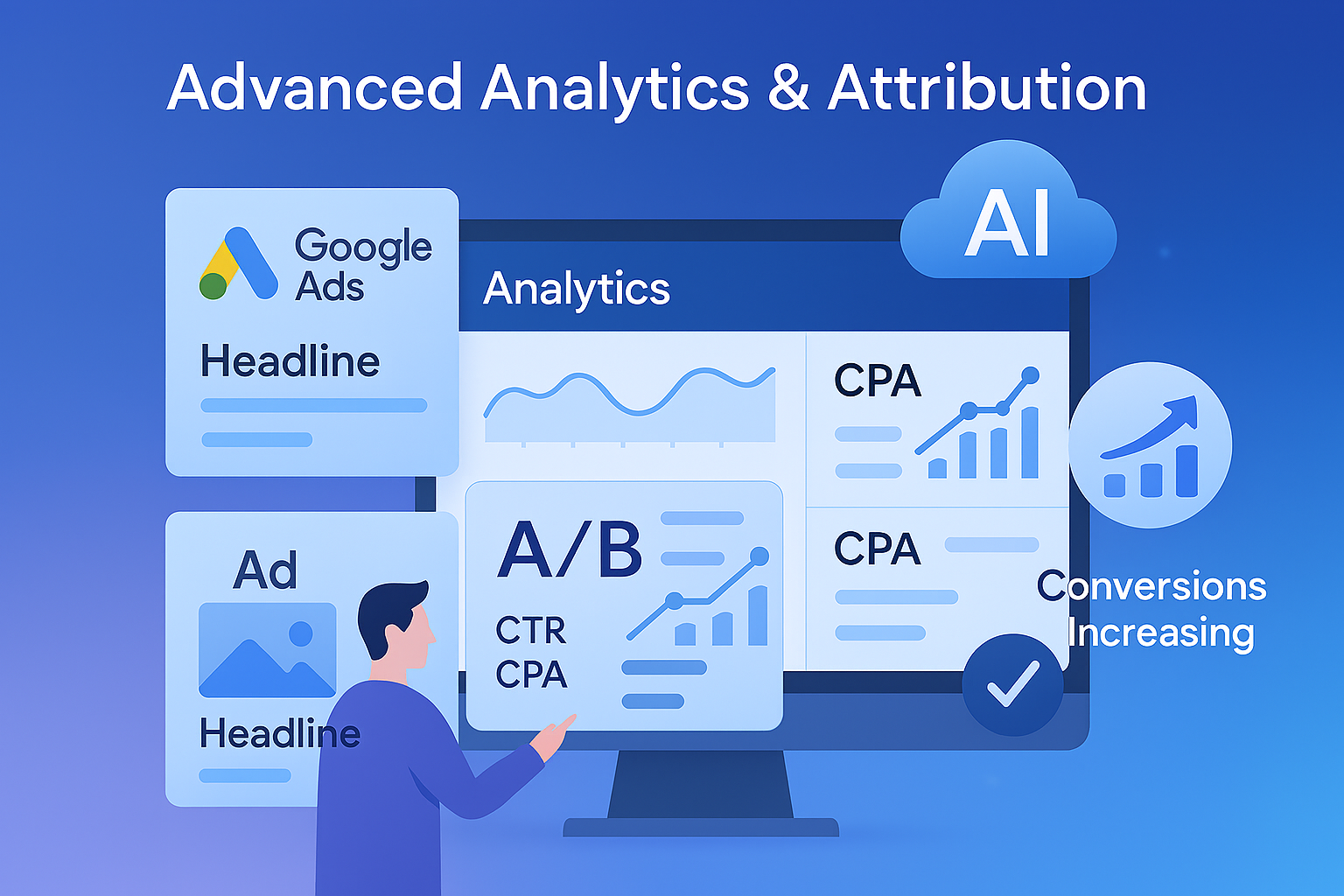
Both Funnel.io and Supermetrics extract and normalize data. They enable performance marketers to feed clean data into BI tools, which is essential for AI-driven insights.
Workflow example: Pull campaign-level spend and conversion data into BigQuery, then run automated anomaly detection and weekly reporting.
Free vs paid: Supermetrics has limited free connectors; both are primarily paid tools aimed at agencies and mid-market teams.
6. Looker Studio (Google Data Studio) + BigQuery ML
Use case: Build dashboards and run simple machine learning models on ad performance data.
Looker Studio is free and integrates with BigQuery. Performance marketers can use BigQuery ML to create predictive models for conversion probability or lifetime value.
Why this matters: Combining visualization with predictive models turns raw data into actionable AI signals — a powerful advantage for any marketer using AI tools for performance marketers.
Category D — Bidding & Automation AI Tools
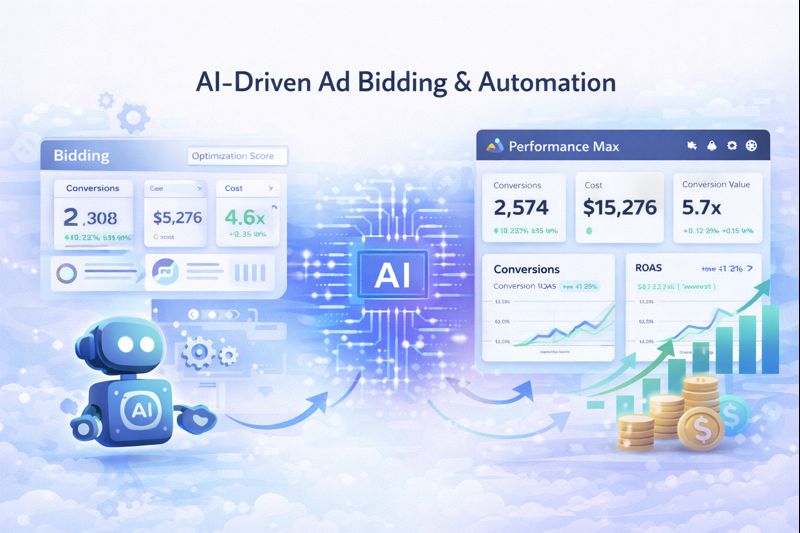
7. Google Ads Smart Bidding (Performance Max & Smart Bidding)
Use case: Automated bidding for conversions or conversion value.
Google’s Smart Bidding strategies — including Target CPA and Target ROAS — are built into the platform. Performance Max uses these signals under the hood as part of its AI optimization. That’s why it appears on most marketers’ lists of essential AI tools for performance marketers.
Workflow example: Run parallel experiments: one with manual bidding and one with smart bidding; compare CPA and conversion quality over 4–6 weeks.
Pro tip: Ensure accurate conversion tracking and allow learning windows before judging performance.
8. Third-Party Automation Platforms (Kenshoo, Marin, Smartly.io)
Use case: Cross-platform bidding, budget allocation, and creative automation at scale.
These enterprise tools provide advanced automation that connects to multiple ad platforms and applies complex rules or AI-driven optimizations across channels.
Category E — CRO & Personalization AI Tools
9. Optimizely / VWO / Convert
Use case: A/B testing, personalization, and experimentation on landing pages.
Conversion Rate Optimization (CRO) tools use AI to identify winning variations and personalize experiences for different audience segments. For performance marketers, these are indispensable AI tools for performance marketers focused on extracting more value from existing traffic.
Workflow example: Run an experiment where the landing page headline is adapted per audience segment; measure lift in conversion rate and LTV.
10. Dynamic Yield / Persado
Use case: Personalization and AI-driven copy optimization for landing pages and emails.
Tools like Dynamic Yield adapt page elements by user segment, while Persado generates language variants proven to increase engagement. Together they form a powerful personalization stack.
Category F — Predictive & LTV Modeling
11. DataRobot / H2O.ai
Use case: Predictive models for lifetime value (LTV), churn, and high-value user identification.
These platforms help performance marketers answer questions like “Which users are likely to convert again?” or “Which campaign sources drive the highest LTV?” — classic examples of high-leverage AI implementations for performance teams.
Workflow example: Train an LTV model using first 30 days of user behavior and then feed the model’s high-value audience into Google Ads or Meta for lookalike targeting.
Category G — Efficiency & Automation (Scripts and Ops Tools)
12. Google Ads Scripts & API Automation
Use case: Automate common tasks: bid changes, budget pacing, alerting, and custom reports.
Although not “AI” in the predictive sense, scripts and APIs are essential operational tools that complement AI models. They make AI-driven recommendations executable at scale.
Why this is practical: Pair model outputs (from BigQuery ML or DataRobot) with scripts to automatically pause low-quality keywords or scale budgets for high-value audiences.
13. Zapier / Make (Integromat)
Use case: Connect tools and create lightweight automations across apps (e.g., push new leads into CRM and trigger email flows).
Zapier and Make ensure your AI signals are useful by connecting them into marketing and sales operations.
Putting It All Together: A Practical 7-Day Pilot Workflow
To make these abstract tools practical, here’s a compact 7-day pilot plan that demonstrates how several of these AI tools for performance marketers work together to improve campaign performance.
Day 1 — Setup & Baseline
- Connect Google Ads and GA4 to Supermetrics or Funnel.io and export to BigQuery.
- Confirm conversion tracking quality.
Day 2 — Creative Generation
- Use ChatGPT or Jasper to generate 20 headline and description variants.
- Use Canva / Midjourney to create 3 hero images and 3 short video concepts.
Day 3 — Audience & Predictive Signals
- Use BigQuery ML or DataRobot to generate a high-value audience score.
- Export top 10% users as an audience to Google Ads and Meta.
Day 4 — Experimentation Setup
- Launch parallel experiments: Performance Max support + Search + Responsive Display with creative variants.
- Use Smart Bidding on one test and manual bidding on the other.
Day 5 — Automations
- Deploy Google Ads scripts and Zapier automations for lead routing and pacing alerts.
Day 6 — Monitoring & Quick Wins
- Use Looker Studio to monitor early signals and pause poor creative or low-converting keywords.
Day 7 — Analyze & Scale
- Review results, pull top creative and audience winners, and scale budgets slowly based on CPA and predicted LTV.
Practical Case: Using AI Tools for a Local Service Campaign
Imagine a local home services client who wants more WhatsApp leads. Here’s a condensed approach using essential AI tools for performance marketers:
- Use Supermetrics to pull data from Google Ads and Facebook into BigQuery.
- Run a simple predictive model in BigQuery ML to identify high-converting ZIP codes.
- Create hyper-local ad copy variations with ChatGPT and local image variations in Canva.
- Use Performance Max as a broader reach support layer while running focused Search and Local campaigns for immediate intent.
- Automate lead routing to WhatsApp via Zapier, and use scripts to pause underperforming timeslots.
This example shows how AI tools for performance marketers reduce guesswork and increase precision in local campaigns.
Cost Considerations: Free vs Paid Tools
When choosing among AI tools for performance marketers, budget matters. Here’s a quick guideline:
- Free / Low cost: ChatGPT free tier, Looker Studio, Canva free, Google Ads native tools.
- Mid-range: Jasper, Supermetrics, Canva Pro, Midjourney subscriptions.
- Enterprise: DataRobot, Kenshoo, Smartly.io, Funnel.io.
Start small with free and mid-range tools to build a repeatable workflow before investing in enterprise platforms.
Common Pitfalls & How to Avoid Them
Even with the best AI tools for performance marketers, mistakes happen. Below are common pitfalls and fixes:
- Pitfall: Blind trust in automation.
Fix: Keep human-in-the-loop checks and exceptions for creative and bidding decisions. - Pitfall: Poor data quality.
Fix: Audit tracking and deduplicate conversions. - Pitfall: Overcomplicating the stack.
Fix: Start with essential tools and add integrations only when needed.
Images & Alt Text (Place these in your post)
Below are three image suggestions with ready-to-use ALT text. Upload them to WordPress with the filenames suggested for best SEO results.
Internal & External Links to Add
Internal links (add these to relevant anchor text):
Authoritative external links (add these for credibility):
Checklist: Launching an AI-Enabled Performance Campaign
- Confirm conversion tracking and set primary conversion.
- Establish data pipelines to BigQuery or preferred warehouse.
- Generate creative variants with GPT and image tools.
- Set up experiments (control vs AI-augmented).
- Deploy scripts and automations for pacing and alerts.
- Monitor learning windows; avoid premature scaling.
- Audit weekly and apply predictive signals to audience targeting.
Conclusion: Which AI Tools for Performance Marketers Should You Start With?
If you are new to AI, begin with these core tools that provide the best ROI for most teams:
- ChatGPT / Jasper for copy and idea generation
- Canva / Midjourney for quick creatives and image variations
- Supermetrics / Funnel.io for data aggregation
- Looker Studio + BigQuery ML for predictive modeling and dashboards
Over time, you can add enterprise tools like DataRobot or Smartly.io as your scale and complexity grow. In every case, the goal is the same: use these AI tools for performance marketers to shorten the time from data to action, increase the volume of good ideas, and scale winners efficiently.
Finally, remember that tools do not replace strategy. Instead, they amplify the right strategy when implemented with discipline, quality data, and continuous testing.