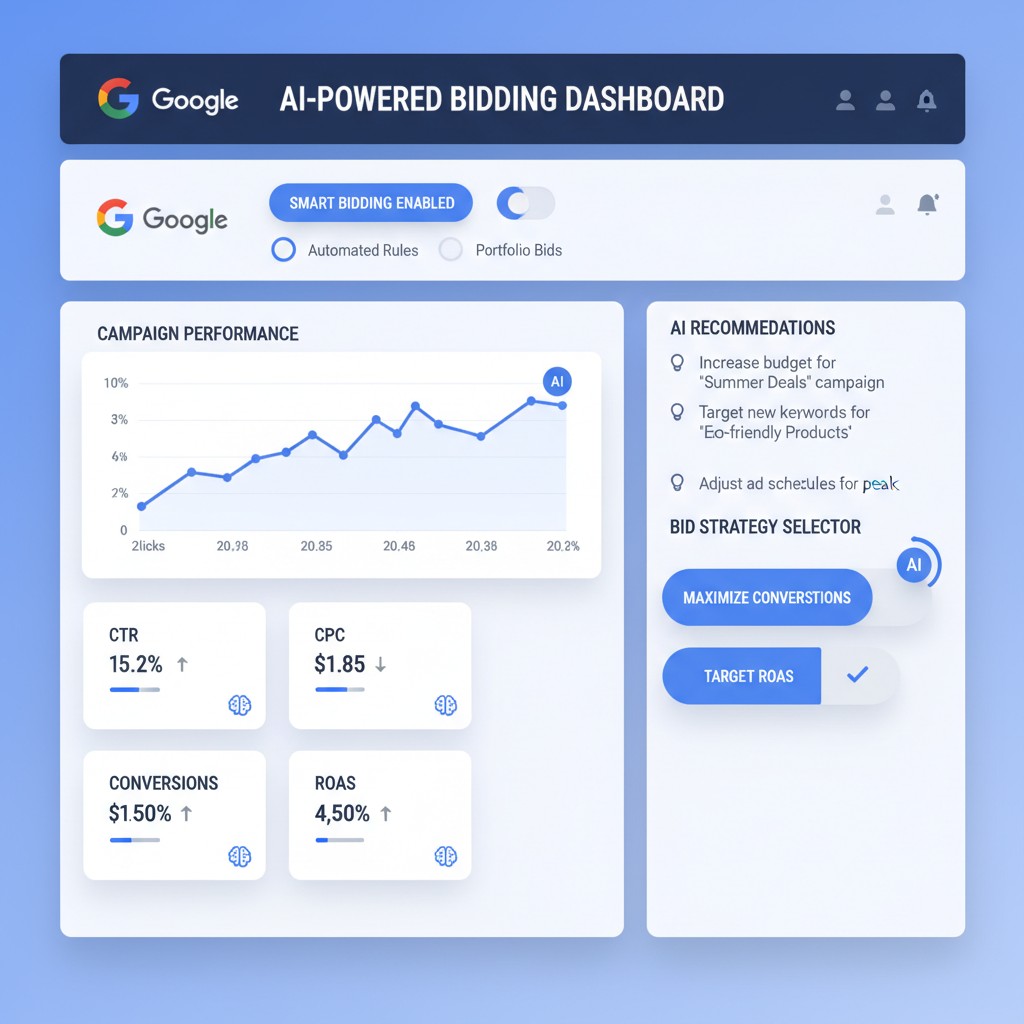
Google Ads AI Explained (2025): Complete Beginner-to-Advanced Guide
Google Ads AI has completely changed how online advertising works in 2025. Earlier, advertisers relied heavily on manual keyword research, bid adjustments, and constant monitoring. However, today Google Ads AI plays a central role in deciding targeting, bidding, creatives, and even budget allocation.
Because of this shift, many beginners feel overwhelmed, while experienced marketers often struggle to balance automation with control. This detailed guide explains Google Ads AI step by step, starting from the basics and gradually moving toward advanced strategies, so even beginners can clearly understand how it works.
If you want to run Google Ads effectively in 2025, understanding Google Ads AI is no longer optional. It is essential.
What Is Google Ads AI?
Google Ads AI refers to Google’s use of artificial intelligence and machine learning to automate and optimize advertising campaigns. Instead of advertisers controlling every setting manually, Google Ads AI analyzes massive amounts of real-time data to make smarter decisions.
In simple terms, Google Ads AI helps determine which ad should be shown, to whom, at what time, and at what cost. Therefore, it focuses on intent and probability rather than just keywords.
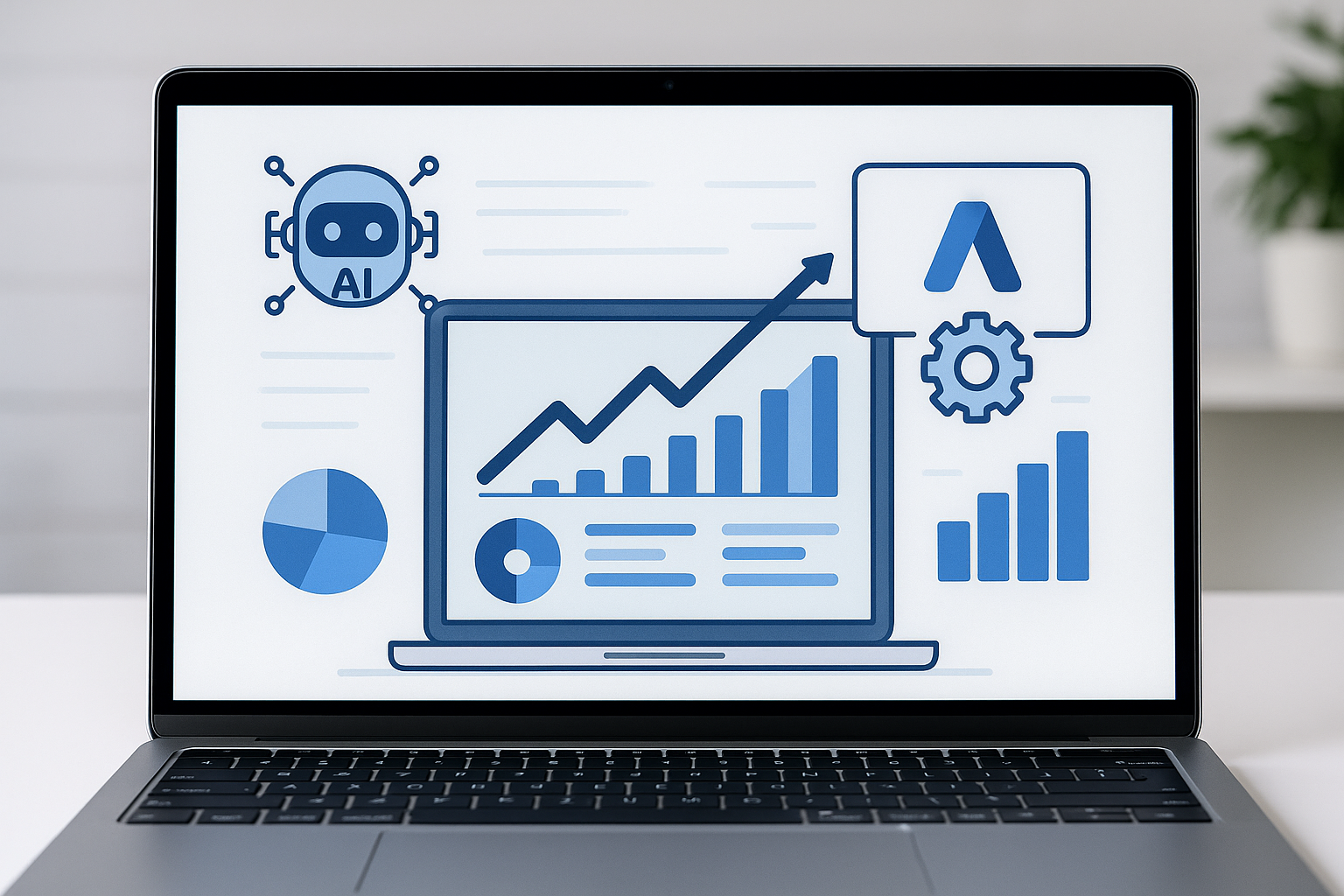
What Google Ads AI Does Automatically
- Adjusts bids in real time
- Matches ads to user intent
- Optimizes creatives based on performance
- Allocates budget dynamically
- Identifies high-converting audiences
As a result, advertisers can focus more on strategy while Google Ads AI handles execution.
Why Google Shifted Advertising Toward AI
Google did not adopt AI without reason. Instead, this shift happened due to significant changes in how users search and interact online.
1. User Behavior Became Complex
Today, users search from different devices, at different times, and with varying intent. Because of this complexity, manual optimization became inefficient. Google Ads AI can process these signals instantly, something humans cannot do.
2. Search Queries Are More Conversational
Earlier, searches were short. Now, users search using complete questions. Therefore, Google Ads AI focuses on understanding intent instead of matching exact keywords.
3. Competition Increased Dramatically
With more advertisers entering auctions, bid management became highly competitive. Google Ads AI helps respond to auction changes in real time.
How Google Ads AI Works Behind the Scenes
Google Ads AI relies on machine learning models trained on historical and live data. These models continuously learn from performance signals and adjust campaigns accordingly.
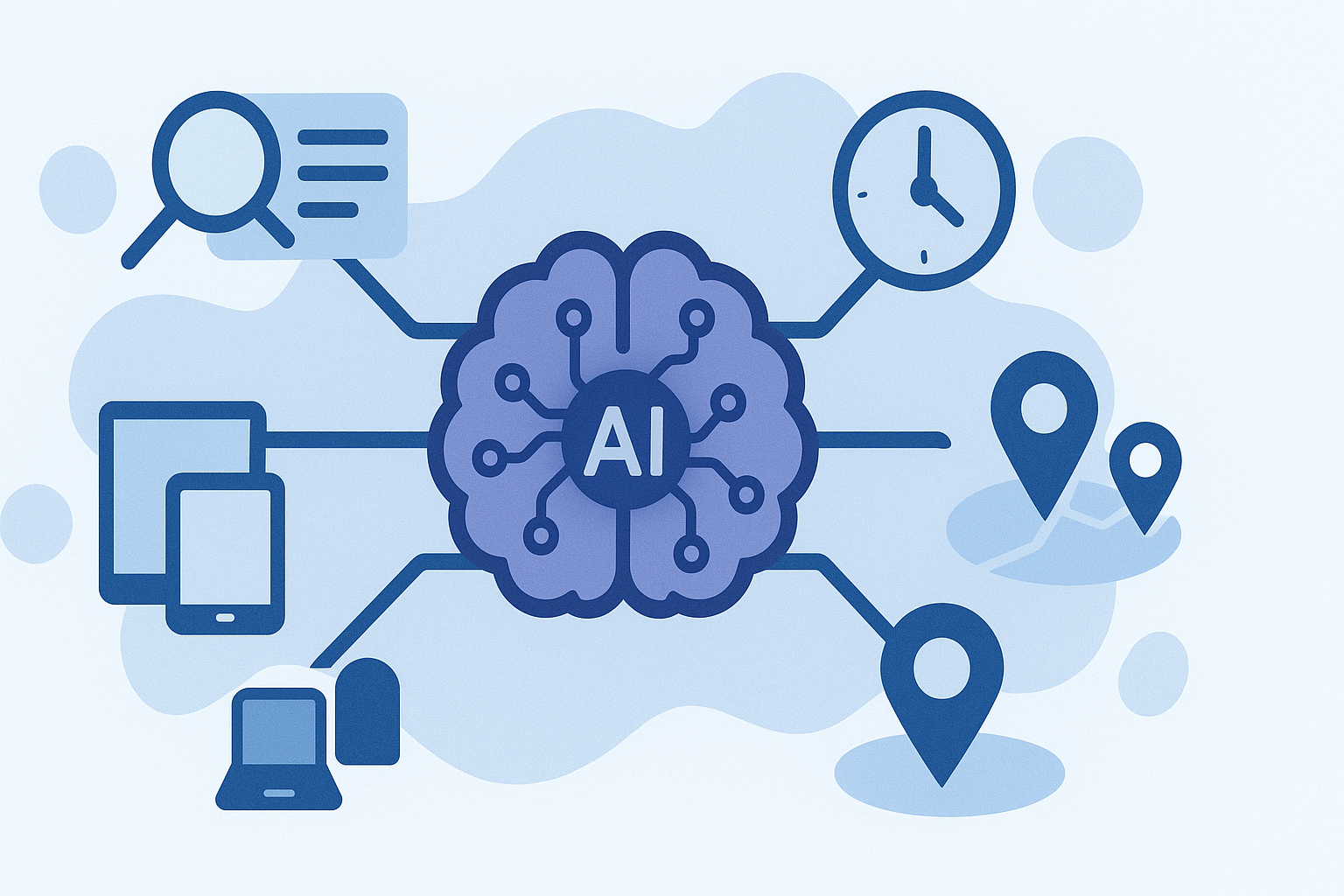
Key Signals Used by Google Ads AI
- Search intent
- User location
- Device type
- Time of day
- Previous conversions
- Competition levels
Consequently, Google Ads AI prioritizes users who are more likely to convert instead of simply matching keywords.
Smart Bidding: The Foundation of Google Ads AI
Smart Bidding is one of the most important features of Google Ads AI. It automatically sets bids based on the likelihood of conversion.
Popular Smart Bidding Strategies
- Maximize Conversions
- Maximize Conversion Value
- Target CPA
- Target ROAS
Therefore, instead of manually increasing or decreasing bids, Google Ads AI evaluates every auction independently.
Broad Match Keywords and Google Ads AI
Broad match keywords work differently in 2025. When combined with Google Ads AI, they match ads based on intent, not just words.
For example, if your keyword is “digital marketing services,” Google Ads AI may show ads for searches like “business growth help online.” As a result, reach increases while maintaining relevance.
Performance Max Campaigns Explained
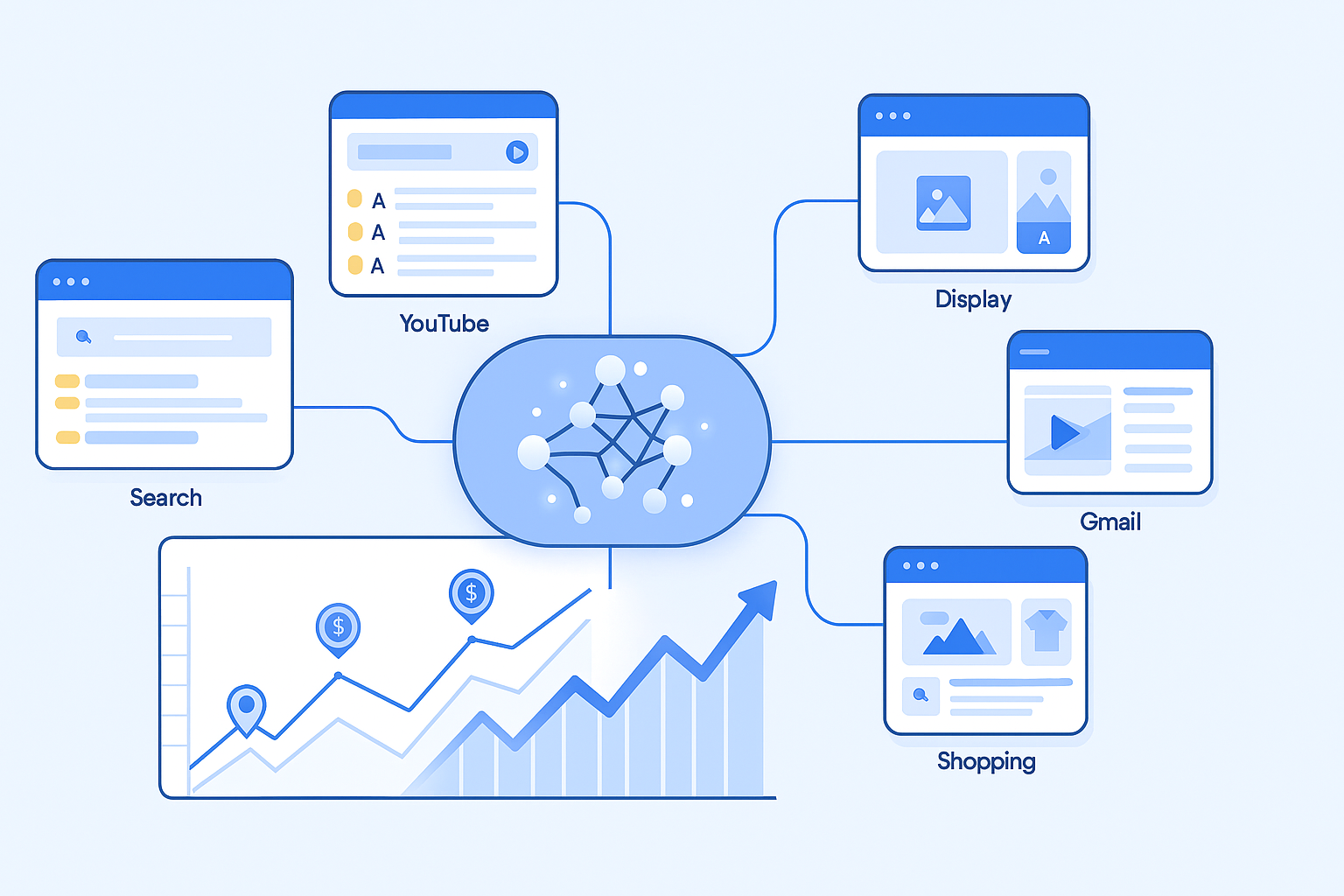
Performance Max is a campaign type fully powered by Google Ads AI. It allows advertisers to access all Google inventory through a single campaign.
Channels Covered by Performance Max
- Google Search
- YouTube
- Display Network
- Discover
- Gmail
When Performance Max Works Best
- E-commerce businesses
- Brands with strong conversion data
- Advertisers looking to scale
When to Avoid Performance Max
- Low budgets
- No conversion tracking
- Need for keyword-level control
AI-Powered Ad Creatives in Google Ads
Google Ads AI helps create and optimize ad creatives. Responsive Search Ads are a strong example of this.
How AI Improves Creatives
- Tests multiple headline combinations
- Matches messages with intent
- Improves CTR automatically
Consequently, advertisers see better engagement without constant manual testing.
Audience Targeting with Google Ads AI
Audience targeting has become intent-based. Google Ads AI focuses on signals rather than fixed demographics.
AI-Driven Audience Types
- In-market audiences
- Custom intent audiences
- Optimized targeting
- Predictive audience expansion
As a result, campaigns reach users who are more likely to convert.
Google Ads AI for Beginners
Beginners should keep things simple. Google Ads AI performs best when campaigns are not overcomplicated.
Recommended Starting Approach
- Search campaigns with Smart Bidding
- Clear conversion tracking
- Responsive Search Ads
Over time, as data grows, Google Ads AI becomes more accurate.
Advanced Strategies Using Google Ads AI
Advanced advertisers can unlock additional performance by combining automation with strategy.
Advanced Techniques
- Value-based bidding
- First-party data integration
- Offline conversion imports
- Portfolio bidding strategies
Therefore, Google Ads AI becomes a growth engine rather than just an automation tool.
Common Mistakes to Avoid with Google Ads AI
- Enabling AI without conversion tracking
- Judging performance too early
- Blindly accepting recommendations
- Frequent budget changes
Avoiding these mistakes ensures better long-term results.
Google Ads AI vs Manual Campaign Management
Manual campaigns provide control, while AI-driven campaigns focus on efficiency.
- Google Ads AI: Faster scaling, automated decisions
- Manual campaigns: More transparency, slower optimization
The Future of Google Ads AI (2025 and Beyond)
Google Ads AI will continue evolving. We can expect more automation, deeper intent matching, and better creative generation.
Advertisers who adapt early will gain a strong competitive advantage.
Internal and External Resources
Internal: Read our Google Ads Smart Bidding Guide for deeper insights.
External: Refer to the Google Ads Help Center for official updates.
Final Thoughts
Google Ads AI is no longer optional in 2025. Whether you are a beginner or an experienced marketer, understanding how Google Ads AI works is essential for success.
By combining clear strategy with Google Ads AI automation, advertisers can achieve sustainable growth, better efficiency, and stronger results.
5 thoughts on “Google Ads AI”