
Performance Marketing KPIs: Metrics That Actually Matter in 2026
Tracking the right metrics has always been important in digital advertising. However, in 2026, it has become absolutely critical. With increasing automation, AI-driven campaigns, and privacy changes, marketers can no longer rely on vanity numbers. Instead, focusing on the right performance marketing KPIs is the key to sustainable growth.
This in-depth guide explains the performance marketing KPIs and metrics that actually matter in 2026. You will learn which KPIs to track, why they matter, how to interpret them, and how to use them to improve conversions, lower costs, and scale profitably.
Whether you manage Google Ads, Meta Ads, or multi-channel campaigns, these performance marketing metrics will help you make smarter, data-driven decisions.

Why Performance Marketing KPIs Matter More Than Ever in 2026
The performance marketing landscape has changed significantly. Platforms now rely heavily on machine learning, while marketers have less visibility into individual user data. As a result, choosing the right performance marketing KPIs has become more important than tracking everything.
In 2026, performance marketing KPIs help you:
- Measure real business impact instead of surface-level engagement
- Optimize campaigns even with limited data
- Make better budget allocation decisions
- Align marketing performance with revenue goals
Therefore, understanding which KPIs truly matter can make the difference between scalable growth and wasted ad spend.
Understanding KPI Categories in Performance Marketing
Before diving into individual metrics, it’s important to understand that performance marketing KPIs fall into several categories. Each category serves a specific purpose in campaign evaluation.
Primary KPI Categories
- Conversion KPIs
- Cost efficiency KPIs
- Revenue and value KPIs
- Engagement and intent KPIs
- Growth and scaling KPIs
Now, let’s break down each category and explore the metrics that actually matter in 2026.
Conversion-Focused Performance Marketing KPIs
1. Conversions (Primary KPI)
Conversions remain the foundation of all performance marketing KPIs. A conversion represents the action that directly supports your business goal, such as a purchase, lead form submission, or WhatsApp inquiry.
In 2026, marketers should focus on:
- Primary vs secondary conversions
- Quality of conversions, not just volume
- Consistent conversion definitions across platforms
Always ensure your primary conversion aligns with revenue or lead quality.
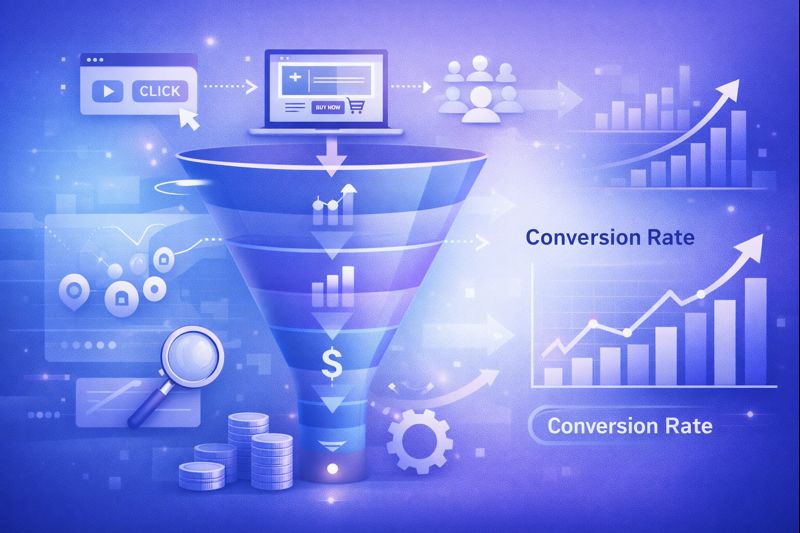
2. Conversion Rate (CVR)
Conversion rate shows how effectively your traffic converts. It is one of the most actionable performance marketing KPIs because it highlights problems in targeting, creatives, or landing pages.
Formula:
Conversion Rate = (Conversions ÷ Clicks) × 100
A rising conversion rate often indicates improved message match and better user experience.
Cost Efficiency Performance Marketing KPIs
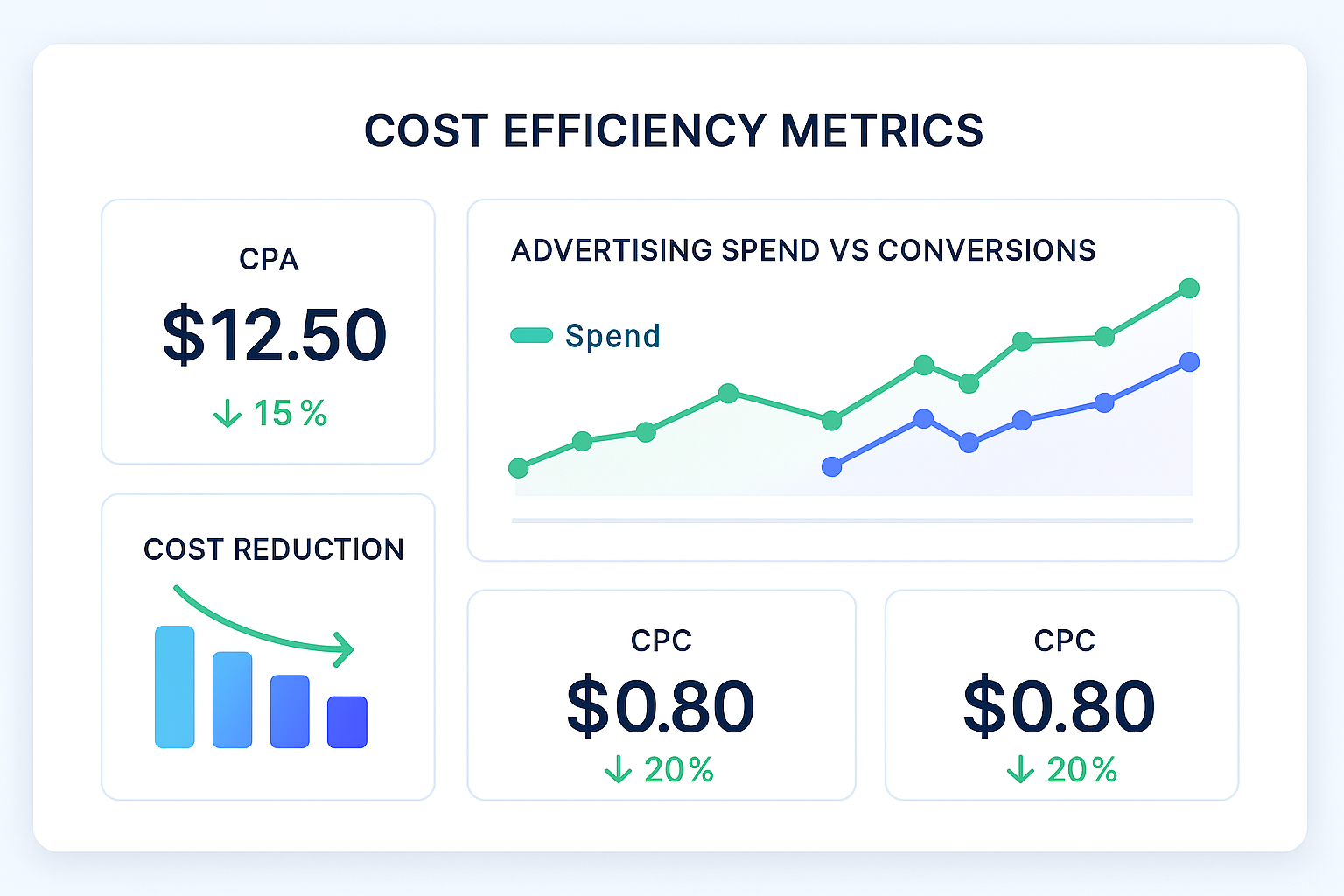
3. Cost Per Acquisition (CPA)
Cost Per Acquisition is one of the most critical performance marketing KPIs in 2026. It tells you how much you pay to acquire one conversion.
Formula:
CPA = Total Ad Spend ÷ Conversions
Lowering CPA without sacrificing quality is a key objective for performance marketers.
4. Cost Per Click (CPC)
Although CPC is not a final success metric, it remains an important supporting KPI. It helps diagnose auction competitiveness and ad relevance.
However, in 2026, CPC should always be evaluated alongside conversion rate and CPA.
Revenue & Value-Based Performance Marketing KPIs
5. Return on Ad Spend (ROAS)
ROAS measures how much revenue you earn for every unit of ad spend. It is one of the most important performance marketing KPIs for ecommerce and revenue-driven businesses.
Formula:
ROAS = Revenue ÷ Ad Spend
In 2026, ROAS works best when paired with smart bidding strategies and accurate revenue tracking.
6. Conversion Value
Conversion value helps AI-driven platforms optimize toward higher-value actions. Instead of treating all conversions equally, marketers can prioritize high-revenue outcomes.
This KPI is especially important for Performance Max and smart bidding campaigns.
Engagement & Intent-Based Performance Marketing KPIs
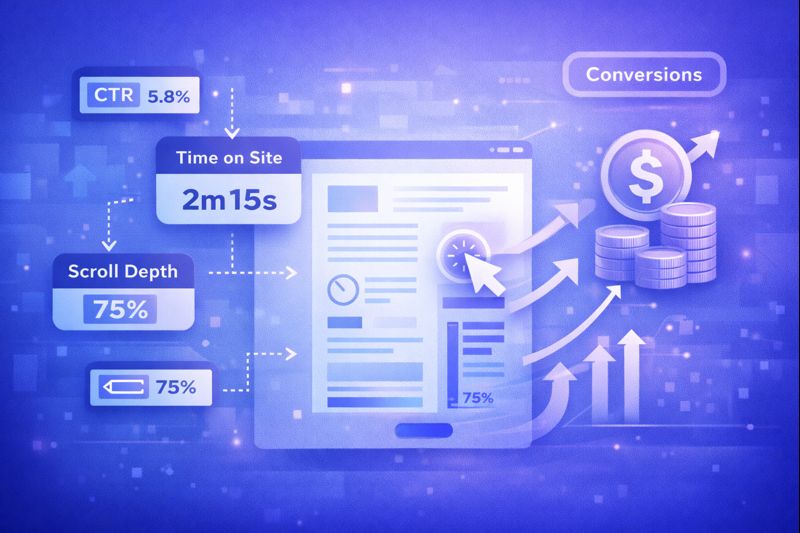
7. Click-Through Rate (CTR)
CTR measures how often users click your ads after seeing them. While it is not a final KPI, it remains useful for evaluating creative effectiveness.
In performance marketing, CTR should support conversion-focused KPIs rather than replace them.
8. Engagement Metrics (Time on Site, Scroll Depth)
Engagement metrics help identify intent quality. High engagement often correlates with better conversion potential.
In 2026, these metrics act as secondary performance marketing KPIs that inform optimization decisions.
Growth & Scaling Performance Marketing KPIs
9. Impression Share
Impression share shows how often your ads appear compared to eligible impressions. It becomes especially important when scaling profitable campaigns.
10. Budget Utilization Rate
This KPI helps ensure you are neither under-spending nor overspending relative to performance goals.
Effective scaling requires balancing CPA, ROAS, and impression share together.
Platform-Specific KPI Considerations
Google Ads KPIs
- Conversions
- CPA / ROAS
- Search Impression Share
Related internal guide:
Google Ads Performance Max Explained
AI & Automation KPIs
Learn more here:
Google Ads AI Explained
Common KPI Mistakes to Avoid in 2026
- Tracking too many metrics without clarity
- Focusing only on clicks and impressions
- Ignoring conversion quality
- Optimizing too early during learning phases
Avoiding these mistakes ensures your performance marketing KPIs drive real growth.
External Resources for KPI Best Practices
Final Thoughts: KPIs That Drive Performance Marketing Success
In 2026, success in digital advertising depends on tracking what truly matters. The right performance marketing KPIs help marketers cut through noise, optimize intelligently, and scale confidently.
By focusing on conversions, CPA, ROAS, and intent-driven metrics, you can build campaigns that deliver long-term value instead of short-term wins.
Ultimately, performance marketing KPIs are not just numbers. They are decision-making tools that guide strategy, budget allocation, and growth.